
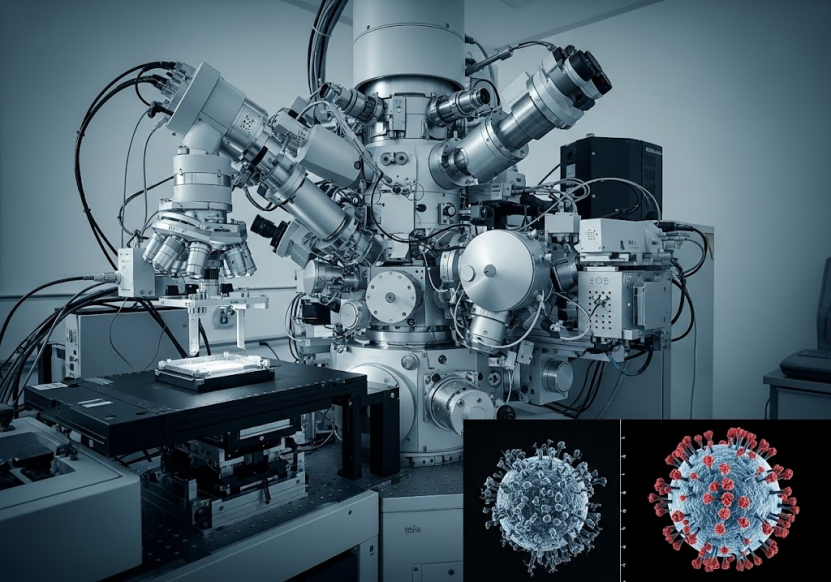
Cryo-Electron Microscopy (Cryo-EM) has revolutionized the field of structural biology, offering unprecedented capabilities to visualize biological macromolecules and complexes at near-atomic resolution. Unlike traditional methods that might require crystallization or fixation, Cryo-EM allows samples to be preserved in a near-native state, providing critical insights into their natural conformations and interactions. This powerful technique, particularly Single Particle Analysis (SPA), is widely applied to understand the intricate structures of biological entities ranging from individual proteins to complex viruses and cellular components.
Understanding structure is fundamental to comprehending function, mechanism, and potential therapeutic intervention. For viruses and cellular components, Cryo-EM provides the detailed structural information necessary for basic research, drug discovery, and vaccine development. Platforms offering comprehensive Cryo-EM services are essential partners for researchers and companies in these areas.
Visit https://shuimubio.com/ for more information on how advanced Cryo-EM services can support your research.
Cryo-EM for Virus Structure Analysis
The study of viruses is a critical area of research, particularly for understanding infectious diseases and developing effective countermeasures like vaccines and antiviral drugs. Cryo-EM is exceptionally well-suited for analyzing virus structures due to its ability to image large, complex assemblies that are often difficult or impossible to crystallize.
Applications of Cryo-EM in Virus Research:
· High-Resolution Virus Structure Determination: Cryo-EM allows researchers to determine the high-resolution three-dimensional structures of viruses and viral components. This includes structures of entire virus particles and key viral proteins like spike proteins.
· Understanding Viral Invasion Mechanisms: By resolving the structures of viruses and their interactions with host cell receptors, Cryo-EM helps elucidate the mechanisms by which viruses infect cells. For instance, Cryo-EM has been used to analyze the structure of the SARS-CoV-2 S protein in complex with the human ACE2 receptor, providing vital information about viral entry.
· Vaccine Development: Structural information from Cryo-EM is crucial for designing effective vaccines.
o It provides key information derived from analyzing virus structures at near-atomic resolution.
o Examples include the analysis of SARS-CoV-2 and ACE2 structures to inform vaccine design, development of novel strategies for influenza attenuated live vaccines, and studying how neutralizing antibodies block measles virus infection to guide new vaccine development.
· Vaccine Quality Control: Cryo-EM is utilized to assess the quality of vaccine preparations at different production stages. It can evaluate critical quality attributes (CQAs) such as morphology, particle size, integrity, and aggregation state. Observing particle morphology and integrity helps identify production issues, and accurately detecting aggregation levels is vital for enhancing vaccine efficacy. Cryo-EM can also be used for detecting the uniformity of various particles, including viruses and virus-like particles (VLP).
· Antibody-Virus Interaction Studies: Studying how antibodies bind to viral antigens using Cryo-EM helps optimize vaccine immunogenicity and develop therapeutic antibodies. This includes research on HIV vaccines, where Cryo-EM has revealed structures of vaccine-induced antibodies bound to HIV-1 Env protein complexes, informing the design of broadly neutralizing antibodies. Similarly, it aids in understanding antibody binding mechanisms to influenza virus surface proteins.
· Responding to Viral Variation: When viruses mutate, Cryo-EM enables rapid structural analysis of new variants. This was demonstrated during the COVID-19 pandemic, where Cryo-EM helped scientists quickly analyze the structures of various SARS-CoV-2 variants, providing essential support for developing vaccines targeting these new strains.
· Analysis of Virus-Like Particles (VLPs): VLPs, often used in vaccines and gene therapy, can also be characterized using Cryo-EM techniques like Single Particle Analysis and Cryo-Characterization. Cryo-Characterization platforms, often enhanced with AI, can effectively identify and analyze VLP types and their characteristics even from low-magnification images.
Advanced Cryo-EM platforms offer solutions tailored for viral structure analysis, including Single Particle Analysis (SPA) services for diverse viral samples, negative staining for particle uniformity checks, and specialized Cryo-Characterization for VLPs. Leading platforms have significant experience with various viruses, such as SARS-CoV-2, Influenza, African Swine Fever Virus (ASFV), Human Herpesvirus 6B (HHV-6B), and Rabies Virus Glycoprotein (VSV-GP). Case studies often highlight successful structure determinations of viral components or complexes, such as the SARS-CoV-2 S protein with ACE2, and antibody complexes with SARS-CoV-2 variants.
Discover the power of cryo em virus analysis at https://shuimubio.com/.
Cryo-EM for Cellular Component Structure Analysis
While imaging an entire, complex eukaryotic cell at high resolution via Cryo-EM Single Particle Analysis (SPA) remains a significant challenge, the term "cryo em cell" in the context of structural biology often refers to the application of Cryo-EM techniques to analyze the structure of isolated cellular components, complexes, and targets that reside within or on cells. These targets are crucial for understanding cellular function and developing therapies.
Applications of Cryo-EM in Analyzing Cellular Components and Targets:
· Membrane Protein Structure Resolution: A significant application of Cryo-EM in the context of the cell is the high-resolution structural analysis of membrane proteins. These proteins, including GPCRs, ion channels, and transporters, are embedded in cellular membranes and play vital roles in signaling, transport, and cellular communication. Cryo-EM is particularly effective for these targets as it overcomes challenges associated with their purification and crystallization. Structural insights into membrane proteins reveal mechanisms of ligand binding, receptor activation, and signal transduction, which are critical for drug discovery.
· Structure of Intracellular Machinery: Cryo-EM is used to determine the structures of complex cellular machinery, such as ribosomes, which are essential for protein synthesis. It also allows for the analysis of protein-nucleic acid complexes like transcription complexes, providing insight into gene expression regulation.
· Enzyme Structures: Many enzymes are key cellular components involved in metabolism, signaling, and other processes. Cryo-EM helps resolve the structures of these enzymes, revealing active sites and mechanisms of action, which is valuable for designing enzyme inhibitors as drugs.
· Analysis of Cell-Derived Particles: Cryo-EM, particularly techniques like negative staining, can be used to characterize cell-derived particles such as exosomes and Virus-Like Particles (VLPs). Negative staining allows for uniformity detection and morphological analysis of these particles. Cryo-Characterization with AI tools can further enhance the analysis of VLP and potentially other nanoparticles derived from cells, assessing size distribution, morphology, and integrity.
· Tissue Section Observation: Negative staining can also be applied to observe tissue sections from plants and animals, including heart muscle tissue. While negative staining provides lower resolution compared to Cryo-EM SPA, it is useful for initial characterization and morphological studies.
· Small Molecules and Peptides within a Cellular Context: MicroED (Microcrystal Electron Diffraction), often performed on Cryo-EM systems, is capable of resolving the high-resolution structures of small molecules, peptides, and proteins from microcrystals or nanocrystals. While the samples analyzed are typically purified crystals, the targets (small molecules, peptides, proteins) are often relevant to cellular processes and drug interactions within cells.
Leading Cryo-EM platforms offer specialized services targeting cellular components. This includes "One-stop" SPA solutions for membrane proteins like GPCRs, ion channels, and transporters, which are primary targets for many cell-based therapies. They also provide protein preparation and analysis services, crucial for obtaining high-quality samples of cellular proteins and complexes. This often involves various expression systems (bacterial, mammalian, insect, cell-free) and purification techniques. The "shelf protein list" offered by some platforms includes numerous cellular targets like GPCRs, ion channels, transporters, and kinases, facilitating research on these key cellular proteins. Case studies demonstrate successful resolutions of structures involving cellular targets, such as ion channels, GPCRs, NMDA receptors, histamine receptors, bradykinin receptors, transcription complexes, cellular chaperones, transporters, pumps , enzymes like KRAS and PolQ, and proteins involved in cellular processes like GSDMB.
Unlock the secrets of cryo em cell components and targets at https://shuimubio.com/.
ShuimuBio's Expertise in Cryo-EM for Biological Structure Analysis
As a commercial Cryo-EM platform, ShuimuBio, founded in 2017, boasts significant expertise and infrastructure dedicated to high-resolution structure determination. The platform is Asia's first commercial platform offering Cryo-EM structural analysis services.
Key Features and Advantages of ShuimuBio's Platform:
· Global Scale and Facilities: ShuimuBio operates one of the largest commercial Cryo-EM platforms globally. It features eight 300kV Cryo-EM microscopes located across Beijing (2 units) and Hangzhou (6 units). These state-of-the-art microscopes are equipped with high-performance detectors, energy filters, spherical aberration correctors, and phase plates to ensure optimal imaging quality. The facilities are meticulously maintained, offering high availability for data collection.
· One-Stop Integrated Solutions: ShuimuBio offers comprehensive "one-stop" solutions, covering the entire process from gene sequence to high-resolution 3D protein structure. This includes protein expression and purification, negative staining for preliminary assessment, cryo-sample preparation, data collection, 2D particle picking, 3D reconstruction, and model refinement. This integrated approach minimizes experimental variability and accelerates the research process.
· Deep Protein Expertise: The platform has established a robust protein expression and purification platform supporting its structural analysis services. They have extensive experience, particularly with challenging membrane proteins (GPCRs, ion channels, transporters). Various expression systems (bacterial, mammalian, insect, cell-free) and purification techniques are employed. Strict quality control, often integrated with Cryo-EM analysis, is applied to ensure protein sample suitability.
· Experienced and Skilled Team: The core team consists of experienced life and computational scientists, IT experts, and pharmaceutical industry professionals. The Cryo-EM center includes seasoned Cryo-EM scientists and professional technical engineers responsible for facility operation and maintenance. This expertise ensures reliable experimental operations and data analysis workflows.
· Extensive Project Experience: ShuimuBio has accumulated rich experience, having completed over 400 Cryo-EM projects and resolved over 150 protein structures. Their success extends to diverse sample types, including membrane proteins, antigen-antibody complexes, and small proteins (smallest resolved is 51kDa). They are committed to achieving the highest possible resolution, with best resolutions reaching 1.8 Å and even achieving 1.4 Å in some cases.
· AI-Driven Platform: The platform utilizes AI technology to enhance efficiency. They have independently developed the SMART software series and the NanoSMART system. These tools improve data analysis efficiency, potentially reduce required data volume, and aid in the automated recognition and analysis of nanoparticles like LNPs, liposomes, AAV, and VLP.
· Proprietary Consumables: To address common challenges in sample preparation like preferential orientation, low concentration, and high background noise, ShuimuBio has developed proprietary graphene support films, GraFuture™ GO and RGO. These are designed to improve sample preparation outcomes, particularly for challenging samples.
· Flexible Services: They offer flexible collaboration models and services, including 24/7 machine time access with rapid response times, as well as comprehensive "one-stop" solutions. Other services include negative staining, cryo-characterization, MicroED, protein preparation/analysis, antibody discovery, SPR, BLI, and ELISA assays.
ShuimuBio's combination of cutting-edge hardware, proprietary technology, experienced personnel, and integrated workflows positions them as a leader in providing high-quality Cryo-EM structural analysis services. Their capabilities are directly applicable and highly valuable for both cryo em virus and cryo em cell component research, supporting efforts in basic science, drug discovery, and vaccine development.
Benefits of Using Cryo-EM for Structural Insights
Utilizing advanced Cryo-EM services provides numerous benefits for researchers studying viruses and cellular components:
· Native State Preservation: Samples are maintained in a near-physiological, frozen-hydrated state, allowing visualization of structures closest to their natural conformations.
· Conformational Flexibility: Cryo-EM can capture multiple conformational states of dynamic molecules, providing insights into their function and mechanisms.
· Minimal Sample Requirement: Compared to crystallography, Cryo-EM often requires less sample material for successful structure determination.
· Complex Structures: It is particularly adept at resolving the structures of large, complex assemblies like viruses, protein complexes, and membrane protein complexes.
· High Resolution Detail: Modern Cryo-EM can achieve resolutions down to near-atomic level, revealing intricate structural details.
· Accelerated Research: The efficiency of data collection and processing, especially with integrated and AI-enhanced platforms, can significantly speed up the time from sample to structure, accelerating drug discovery and development processes.
Conclusion
Cryo-EM has become an indispensable tool in modern structural biology, profoundly impacting our understanding of biological systems at the molecular level. Its unique ability to resolve the high-resolution structures of large, dynamic, and complex biological entities in near-native states makes it particularly powerful for studying viruses and key cellular components. Whether investigating viral replication mechanisms, developing new vaccines, or understanding the function of crucial cellular membrane proteins, Cryo-EM provides the foundational structural data required for scientific advancement and therapeutic innovation.
For researchers seeking to leverage the full potential of Cryo-EM for their cryo em virus or cryo em cell component projects, partnering with an experienced platform equipped with advanced technology is essential. ShuimuBio offers a comprehensive suite of Cryo-EM and related structural biology services, supported by world-class facilities, a seasoned team, and proprietary technologies designed to overcome challenging projects and deliver high-quality structural insights.
Learn how our expertise can accelerate your research. Visit https://shuimubio.com/ to explore our services and discuss your project needs.