
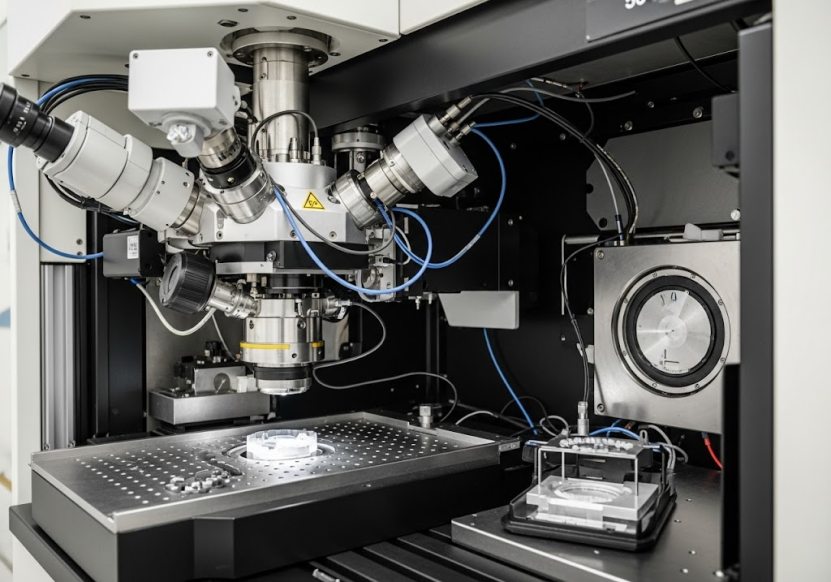
Cryo-Electron Microscopy (Cryo-EM) has revolutionized structural biology, offering unprecedented capabilities to visualize biological macromolecules in close-to-native states. Among the most significant beneficiaries of this technology are proteins, which play crucial roles in virtually all biological processes. Understanding protein structure is fundamental to deciphering their function, interactions, and involvement in health and disease, making it indispensable for drug discovery, vaccine development, and fundamental research.
ShuimuBio stands at the forefront of this revolution, offering a comprehensive platform for cryo em protein structure analysis and characterization. As Asia's first commercial platform providing Cryo-EM structure analysis services, ShuimuBio has established advanced, reliable experimental procedures and data analysis workflows. Their mission is to enable researchers and companies to achieve high-precision 3D structures of proteins and other biological molecules, effectively transforming genetic sequences into detailed structural insights.
Unveiling the Intricacies of Cryo EM Protein Structure
Single Particle Analysis (SPA) is a core Cryo-EM technique used to determine the high-resolution three-dimensional structure of purified biological macromolecules, including proteins. This involves collecting numerous two-dimensional images of individual protein particles and employing sophisticated computer algorithms to process and reconstruct them into a 3D model.
The SPA approach is particularly powerful for proteins that are difficult to crystallize, such as membrane proteins. ShuimuBio offers a "one-stop" SPA solution covering a wide range of protein types. These include:
· Antigen-antibody complexes.
· Small molecules bound to target proteins.
· PROTACs.
· Membrane proteins, such as GPCRs, ion channels, and transporters. ShuimuBio has extensive experience in the production and purification of these challenging membrane proteins.
· VLPs (Virus-Like Particles).
· Peptides.
A key advantage of Cryo-EM SPA for proteins is its ability to maintain samples in a near-native state, capture multiple conformational states, and achieve high resolution with relatively small sample quantities. It is also effective for determining the structure of heterogeneous protein complexes.
ShuimuBio's SPA services are designed for efficiency and cost-effectiveness, offering free project evaluation and regular progress meetings. The typical workflow involves sample preparation, negative stain screening, cryo-sample preparation, data collection, 2D particle picking, 3D reconstruction, model refinement, and data delivery.
Addressing the Challenge of Cryo EM Protein Size
One significant challenge in structural biology, particularly for Cryo-EM, is resolving the structure of small proteins. Smaller proteins yield weaker signals and are more susceptible to challenges like preferred orientation and high background noise. Traditionally, this has made resolving the structures of proteins below a certain size threshold difficult for Cryo-EM SPA.
However, advancements in Cryo-EM technology and sample preparation methods have pushed the boundaries of resolvable protein size. ShuimuBio has demonstrated its capability in this area, successfully resolving structures of proteins as small as 51kDa. This achievement highlights the platform's technical prowess and expertise in handling challenging protein samples.
To further address difficulties associated with challenging samples, including proteins with small molecular weight, low concentration, or susceptibility to air-liquid interface damage and preferred orientation, ShuimuBio has developed proprietary technologies. Their GraFuture™ series of graphene grid support films (GraFuture™ GO and GraFuture™ RGO) are specifically designed to help overcome these limitations and improve sample preparation for Cryo-EM. These innovative consumables provide potential solutions for the preferred orientation problem and are suitable for various challenging scenarios.
Furthermore, ShuimuBio leverages advanced infrastructure and expertise. Their Cryo-EM center is equipped with high-end 300kV systems designed specifically for high-quality structure resolution. An expert team of scientists, holding Ph.D. degrees from top institutions and specializing in structural biology, protein science, and computational biology, drives the platform's ability to tackle diverse and complex protein structures.
For small molecules, peptides, and even small protein crystals, MicroED (Micro-Electron Diffraction) offers an alternative high-resolution technique. ShuimuBio provides MicroED solutions capable of resolving structures from micro and nanocrystals, achieving impressive resolutions down to 0.6-1.0 Å. Their proprietary eTasED software allows seamless integration of MicroED technology with standard Cryo-EM systems, enhancing efficiency and accuracy. This service is applicable to protein crystals, peptides, and small molecules.
Essential Support Services for Successful Protein Structure Analysis
Achieving high-resolution cryo em protein structures fundamentally depends on the quality and purity of the protein sample. Recognizing this, ShuimuBio provides comprehensive protein preparation and analysis services as part of their one-stop solution from gene sequence to high-precision 3D structure.
Their protein expression platform utilizes various systems to meet specific protein requirements:
· E. coli expression system: Economical, fast, high yield, widely applicable, especially advantageous for small protein production.
· Mammalian cell protein expression system: Preferred for therapeutic proteins, vaccines, and antibodies, offering native-like structure, post-translational modifications, and biological activity.
· Insect cell expression system: High expression efficiency, large capacity for foreign genes, capable of post-translational modifications for biological activity.
· Cell-free expression system: Enables rapid protein synthesis in vitro, shortening expression times from days to hours.
Beyond expression, ShuimuBio offers protein sample processing services like complex incubation, molecular sieving, and purification methods including affinity chromatography, ion exchange chromatography, gel filtration chromatography, and RP-HPLC. Strict quality control measures, including SDS-PAGE, Western blot, mass spectrometry, thermal stability, and solubility tests, are employed to ensure protein samples meet the stringent requirements for Cryo-EM analysis. They have deep experience in the challenging field of membrane protein production and purification.
For initial sample assessment and particle characterization, especially important for verifying the uniformity and morphology of protein samples before embarking on high-resolution Cryo-EM, ShuimuBio offers Negative Stain and Negative Stain 2D services. This low-cost technique provides preliminary insights into particle size, uniformity, aggregation state, morphology, and sample integrity. It is widely used for checking the uniformity of various protein particles, including AAV, exosomes, membrane proteins, viruses, and soluble proteins.
Further protein characterization services, such as SPR, BLI, and ELISA assays, are also available. These techniques are valuable for analyzing protein-protein or protein-small molecule interactions, binding kinetics, and protein concentration, providing complementary data to structural studies.
Diverse Applications Driven by Cryo EM Protein Analysis
The ability to resolve high-resolution cryo em protein structures has a profound impact across various fields of life science and drug development.
In the antibody drug field, Cryo-EM is crucial for:
· Resolving the structure of antibody-antigen complexes to understand binding mechanisms and epitopes. This structural information is vital for designing more effective antibody drugs.
· Studying the mechanism of action of antibody drugs, including how they bind targets and modulate signaling pathways. Cryo-EM has been used to analyze broad-spectrum neutralizing antibodies against viral variants, providing insights into their molecular basis.
· Optimizing antibody drugs by analyzing their interaction with antigens, revealing dynamic processes and conformational changes. This helps design antibodies with higher affinity and specificity.
· Resolving the structure of challenging membrane protein targets like GPCRs, which are common targets for antibody drugs.
· Accelerating the drug development process by quickly providing detailed structural information for design and optimization.
In the small molecule drug field, Cryo-EM plays a key role in:
· Resolving the high-resolution structure of drug targets, including membrane proteins (like GPCRs) and enzymes, to understand binding sites and mechanisms. Structural details of GPCRs binding small molecule ligands provide a basis for designing selective and potent drugs.
· Investigating the interaction mechanism between small molecule drugs and their targets, such as how agonists or antagonists modulate receptor activity and downstream signaling.
· Supporting Fragment-Based Drug Discovery (FBDD) by revealing details of small molecule fragment interactions with protein targets, aiding in screening and optimizing potential candidates.
· Accelerating the drug discovery process by efficiently resolving target structures.
· Studying biased ligands that selectively modulate specific signaling pathways mediated by targets like GPCRs, offering structural insights for developing precise therapies.
· Resolving the structure of complex targets such as membrane proteins and enzyme complexes.
In the vaccine field, Cryo-EM contributes significantly by:
· Resolving the near-atomic resolution 3D structure of viruses, helping researchers understand invasion mechanisms and providing key information for vaccine design. This includes studies on SARS-CoV-2 (like the S protein and its complex with ACE2) and influenza virus.
· Assessing vaccine quality control by examining morphology, particle size, integrity, and aggregation level of vaccine particles at different production stages. Checking protein particle uniformity using negative stain is a valuable preliminary step.
· Studying the interaction mechanisms between antibodies and vaccine antigens to optimize vaccine immunogenicity. Examples include research on HIV and influenza vaccines.
· Rapidly resolving the structure of new viral variants when they emerge, allowing scientists to adjust vaccine design strategies in a timely manner.
Why Choose ShuimuBio for Cryo EM Protein Structure and Size Analysis?
ShuimuBio combines extensive experience, cutting-edge technology, and dedicated expertise to provide unparalleled Cryo-EM services.
· Global Scale: ShuimuBio operates one of the largest commercial Cryo-EM platforms globally, equipped with multiple high-end 300kV systems in Beijing and Hangzhou.
· Proven Experience: With experience from over 400 customer projects, ShuimuBio has successfully resolved the structures of more than 150 proteins. They have completed over 300 single particle projects.
· High Resolution: ShuimuBio consistently aims for exceptional resolution, having achieved a best resolution of 1.4 Å and successfully resolving structures down to 1.8 Å for over 150 proteins.
· Resolving Small Proteins: Crucially, they have demonstrated the capability to resolve structures of proteins as small as 51kDa, addressing a significant challenge in the field of cryo em protein size analysis.
· Advanced Technology: The platform integrates AI-driven software like the SMART series to enhance data analysis efficiency, proprietary consumables like GraFuture™ graphene grids for challenging samples, and MicroED solutions utilizing eTasED software for microcrystal analysis.
· Expert Team: A team of doctoral level scientists from top institutions provides specialized expertise in structural biology, protein science, and computational biology.
· One-Stop Service: Offering an integrated workflow from gene sequence to high-resolution protein structure, including comprehensive protein expression, purification, and characterization services, minimizes sample handling risks and streamlines the process.
Conclusion
Cryo-EM is an indispensable tool for resolving the high-resolution structures of proteins, providing critical insights into their function, interactions, and role in disease. The ability to perform cryo em protein structure analysis on a wide variety of protein types and sizes is vital for advancing research and drug development.
ShuimuBio's platform excels in this domain, offering state-of-the-art facilities, deep expertise, and innovative technologies tailored for challenging samples. Their proven success in resolving structures down to 51kDa demonstrates their capability to handle complexities associated with cryo em protein size limitations. By providing a seamless, one-stop service from protein preparation to structure determination, ShuimuBio empowers researchers to accelerate their discoveries.
To learn more about how ShuimuBio's Cryo-EM services can support your protein research or drug development project, including detailed information on their capabilities for diverse protein types and handling samples across various sizes, please visit:
https://shuimubio.com/