
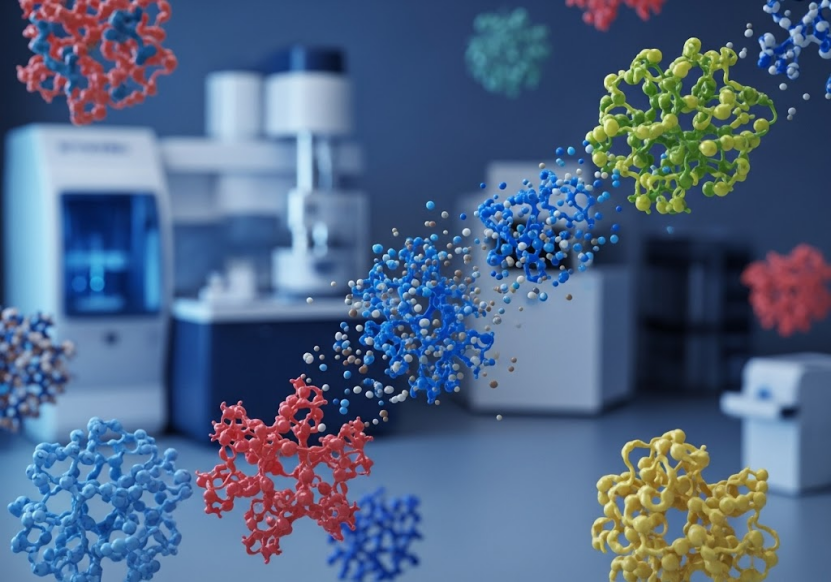
In the realm of structural biology and drug discovery, understanding the intricate three-dimensional architecture of biological molecules is paramount. Traditional techniques often face limitations, especially when dealing with flexible or difficult-to-crystallize targets. This is where advanced methods like single particle cryo em of biological macromolecules, single particle analysis become indispensable. Single Particle Analysis (SPA), coupled with Cryogenic Electron Microscopy (Cryo-EM), is a powerful technique that provides high-resolution insights into the structure and function of a wide range of biological macromolecules.
What is Cryo-EM Single Particle Analysis (SPA)?
Single Particle Analysis (SPA) is a method that utilizes Cryo-EM technology to determine the high-resolution three-dimensional structure of biological macromolecules, including proteins and viruses. Unlike crystallography, which requires samples to be in a crystalline form, SPA analyzes individual particles that are flash-frozen in a thin layer of vitreous ice, preserving them in a near-native state. The process involves taking a large number of two-dimensional images of these purified biological macromolecule particles from various orientations. Advanced computer algorithms are then employed to process and reconstruct these 2D images into a detailed 3D structural model.
The power of single particle analysis lies in its ability to overcome challenges faced by other techniques. It is particularly effective for resolving the structures of proteins that are difficult to crystallize, capturing multiple functional or conformational states of a molecule, and studying large or heterogeneous complexes without needing to isolate individual components. This approach requires relatively small amounts of sample, which is a significant advantage for precious biological samples.
Applications of Single Particle Cryo EM of Biological Macromolecules
The versatility of single particle cryo em of biological macromolecules has made it a cornerstone in numerous research and development areas, providing crucial structural information across life sciences and drug discovery.
Resolving Diverse Biological Structures: SPA can reveal the high-resolution 3D structures of a wide array of biological macromolecules. This includes different types of proteins, such as membrane proteins (like GPCRs, ion channels, and transporters), enzymes, and ribosomes. It is also used to analyze the structure of DNA and RNA, including their double-helix structures and interactions with other molecules, as well as viral RNA and ribosomal RNA. Furthermore, SPA is adept at resolving the structures of protein-nucleic acid complexes, such as transcription complexes and viral capsid proteins bound to viral RNA. Complex virus particles themselves, including SARS-CoV-2, influenza virus, African Swine Fever Virus (ASFV), Human Herpesvirus 6B (HHV-6B), and rabies virus glycoprotein (VSV-GP), can be visualized and studied in detail using this technology.
Vaccine Development: Single particle analysis plays a vital role in accelerating and optimizing vaccine development.
· Virus Structure Resolution: By providing near-atomic resolution structures of viruses, Cryo-EM helps researchers understand viral invasion mechanisms, which is critical for vaccine design. Examples include resolving the structures of SARS-CoV-2 proteins and complexes with host receptors, and studying influenza virus structures for new vaccine strategies.
· Vaccine Quality Control: Cryo-EM is used to assess key quality attributes of vaccine particles at various manufacturing stages, such as morphology, size, integrity, and aggregation, aiding in process optimization. Visualizing particle morphology and integrity helps identify production issues, and detecting aggregation is crucial for vaccine efficacy.
· Antibody-Vaccine Interaction: The technique helps study how antibodies bind to vaccine antigens, which assists in optimizing vaccine immunogenicity. Research on HIV and influenza vaccines has utilized Cryo-EM to understand antibody binding mechanisms.
· Responding to Viral Variation: When viruses mutate, Cryo-EM can quickly resolve the structures of new variants, allowing scientists to adapt vaccine designs promptly. It supported the understanding of SARS-CoV-2 variants during the pandemic to aid vaccine development.
Antibody Drug Development: In the development of antibody-based therapeutics, single particle analysis provides critical structural information.
· Antibody-Antigen Complex Structure: Resolving the high-resolution structures of antibody-antigen complexes helps researchers understand binding mechanisms and epitopes, which is essential for designing more effective antibody drugs. Cryo-EM allows clear visualization of how antibodies interact with targets, such as viral surface proteins.
· Mechanism of Action Studies: Cryo-EM helps investigate how antibody drugs work, including target binding and modulation of signaling pathways. It has been used to reveal the molecular basis of broad neutralizing activity for antibodies against SARS-CoV-2 variants.
· Antibody Optimization and Design: Structural analysis by Cryo-EM can identify potential improvements in existing antibodies, revealing dynamic binding processes and conformational changes to guide the design of antibodies with higher affinity and specificity. It also aids in analyzing conformational epitopes for antibody engineering.
· Membrane Protein Targets: Many antibody drug targets are membrane proteins like GPCRs. Cryo-EM is crucial for resolving their high-resolution structures, revealing mechanisms of ligand binding, receptor activation, and signal transduction, providing vital structural information for developing antibodies against these targets.
· Accelerating R&D: The high resolution and rapid data collection capabilities of Cryo-EM speed up the process of resolving biological macromolecule structures, thereby accelerating the antibody drug development pipeline by quickly providing detailed structural information for antibody design optimization.
Small Molecule Drug Development: Single particle analysis is also highly valuable in the development of small molecule drugs.
· Target Structure Resolution: Cryo-EM provides high-resolution structures of biological macromolecule targets, such as membrane proteins and enzymes. Resolving GPCR structures with bound small molecule ligands, for instance, provides detailed insights for designing selective and potent drugs.
· Drug Mechanism Studies: The technique allows researchers to study the interaction mechanisms between small molecule drugs and their targets. Analyzing complex structures of GPCRs with agonists or antagonists helps understand how drugs modulate receptors and downstream signaling.
· Fragment-Based Drug Discovery (FBDD): Cryo-EM shows great potential in FBDD by revealing interaction details between small molecule fragments and protein targets, assisting in screening and optimizing drug candidates.
· Accelerating R&D: Similar to antibody development, the efficiency of Cryo-EM in resolving structures speeds up the small molecule drug discovery process, quickly providing detailed structural information for drug design optimization.
· Biased Ligand Studies: Cryo-EM has unique advantages in studying biased ligands that selectively modulate specific GPCR signaling pathways, providing structural insights into their mechanisms for developing novel small molecule drugs.
· Complex Target Structures: Cryo-EM excels at resolving structures of complex biological macromolecules, such as membrane proteins and enzyme complexes, which are important targets in small molecule drug development.
Addressing Challenges in Single Particle Analysis
While powerful, SPA can face challenges with certain samples, such as those with very small molecular weights, low concentrations, strong background noise, or issues like air-water interface damage and preferred orientation. To address these, innovative solutions are being developed. For instance, graphene grids, like the GraFuture™ series, offer potential solutions for preferred orientation and other issues, making it possible to study challenging samples.
Partnering for High-Resolution Biological Macromolecule Structure Resolution
Achieving high-quality, high-resolution structures through single particle cryo em of biological macromolecules, single particle analysis requires state-of-the-art facilities, experienced scientists, and advanced computational capabilities.
Leading platforms in the field integrate cutting-edge Cryo-EM hardware, such as 300kV microscopes equipped with high-performance detectors, energy filters, aberration correctors, and phase plates, designed specifically for high-quality biological macromolecule structure resolution. These facilities are maintained diligently to ensure optimal performance and high uptime.
Complementing advanced hardware is a team of expert scientists specializing in structural biology, protein science, and computational biology. Their experience is crucial for navigating the complexities of sample preparation, data collection, and rigorous data analysis. AI-driven software platforms further enhance efficiency and accuracy throughout the single particle analysis process, reducing machine time and data volume while improving analysis quality.
A comprehensive structural biology service provider offers an integrated "one-stop" solution, streamlining the process from gene sequence to high-precision 3D structure. This often includes in-house protein expression and purification services, critical for obtaining the high-purity, homogeneous samples required for successful Cryo-EM SPA. Services cover various expression systems and purification techniques. Additional supporting services like negative staining for initial sample characterization and cryo-characterization for specialized particles like LNPs and viruses further enhance the workflow. Resolving structures of small molecules or peptides can also be achieved using complementary techniques like MicroED. Providers with extensive experience across numerous projects and high-resolution achievements demonstrate proven capability in tackling diverse biological macromolecule targets.
In conclusion, single particle cryo em of biological macromolecules, single particle analysis represents a transformative technology in structural biology, enabling the resolution of complex biological structures at unprecedented detail. Its applications span fundamental research, vaccine development, and both antibody and small molecule drug discovery, providing essential insights that drive innovation.
To explore how high-resolution single particle analysis can advance your research or development projects and to learn more about comprehensive structural biology solutions, please visit https://shuimubio.com/.