
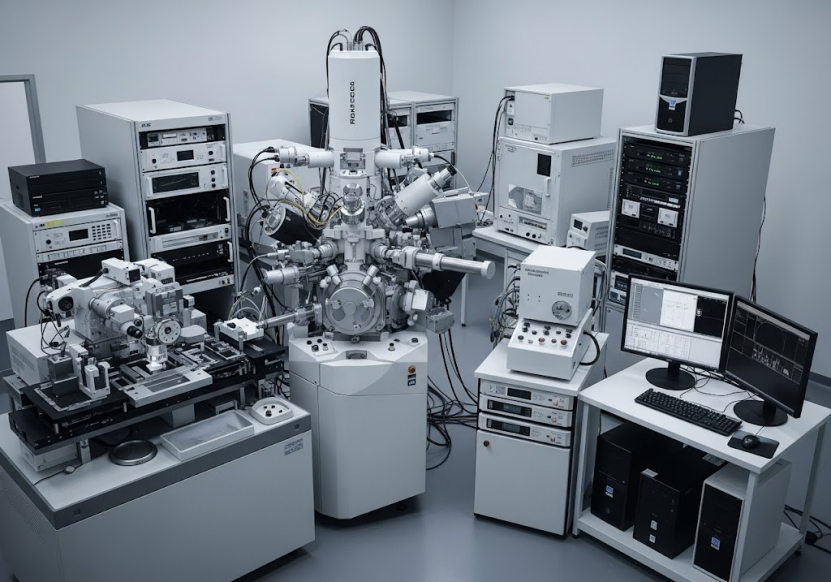
In the dynamic fields of life sciences and drug discovery, understanding the intricate three-dimensional structures of biological molecules is paramount. Among the most critical subjects are proteins, the workhorses of the cell, whose functions are inextricably linked to their precise atomic arrangements. Achieving accurate protein structure determination is a fundamental step in rational drug design, understanding disease mechanisms, and developing new therapies. Traditionally, techniques like X-ray crystallography and NMR spectroscopy have been cornerstones for this purpose. However, these methods often face limitations, particularly when dealing with challenging targets such as membrane proteins, large complexes, and flexible molecules. This is where advanced electron microscopy protein structure determination techniques, most notably Cryo-Electron Microscopy (Cryo-EM), have revolutionized the landscape.
Cryo-Electron Microscopy: A Breakthrough in Structure Determination
Cryo-EM is a powerful technique that allows for the visualization of biological macromolecules in a near-native state, frozen in a thin layer of vitreous ice. Unlike traditional electron microscopy, which often requires staining or dehydration that can distort biological samples, Cryo-EM preserves the natural conformation of the molecules. This is particularly advantageous for studying large, complex, and dynamic structures.
One of the most widely used Cryo-EM approaches for protein structure determination is Single Particle Analysis (SPA). SPA involves imaging thousands to millions of individual particles of a purified biological macromolecule scattered across a grid. These two-dimensional images, representing different orientations of the molecule, are then computationally processed and reconstructed to generate a high-resolution three-dimensional structural model. SPA is capable of revealing the 3D structure of proteins, viruses, and other biomacromolecules at high resolution, even those that are difficult to crystallize. It is widely applied to research challenging targets like membrane proteins (such as GPCRs, ion channels, and transporters), VLPs, polypeptides, and interactions between small molecules and target proteins. SPA offers several key advantages, including the preservation of samples in a state close to their native form, the ability to capture various conformational states, the requirement for only small amounts of sample, and the capability to determine the structure of heterogeneous protein complexes.
ShuimuBio's Expertise in Cryo-EM Structure Determination
As Asia's first commercial platform to provide Cryo-EM structuredetermine services, ShuimuBio was founded in 2017 by a core team of scientists and industry experts. The company has established an advanced and reliable experimental operation and data analysis workflow, leveraging deep research and technical accumulation in structural biology. ShuimuBio's Cryo-EM center is staffed by seasoned electron microscopy scientists and professional engineers responsible for facility operation and maintenance, ensuring data collection is performed under optimal performance conditions.
ShuimuBio boasts the world's largest commercial Cryo-EM platform, equipped with 8 x 300kV Cryo-EMs (2 in Beijing, 6 in Hangzhou, though later mention suggests 12 in Beijing and 6 in Hangzhou, totaling 18). These are high-end microscopes equipped with advanced detectors, energy filters, spherical aberration correctors, and phase plates to maximize imaging quality. The platforms are meticulously maintained, ensuring high efficiency and quality data collection with over 330 days of availability per year and a no-fault operation rate exceeding 97%.
The company has extensive experience, having worked on over 400 Cryo-EM projects and successfully resolved over 150 protein structures, achieving a best resolution of 1.8 Angstroms. Their expertise covers a wide range of targets, from membrane proteins to antibody-antigen complexes. ShuimuBio is committed to achieving extreme resolution, demonstrating success with structures as small as 51kDa and reaching a breakthrough resolution of 1.4 Angstroms in some cases.
To further enhance the efficiency and accuracy of electron microscopy protein structure determination, ShuimuBio has independently developed the SMART software series, an AI-driven platform. This platform utilizes AI technology to improve data analysis, reducing machine running time and the required data volume. They have also developed GraFuture™, a series of graphene grids, to overcome common sample preparation challenges in traditional methods, such as air-water interface absorption, severe preferred orientation, high sample concentration thresholds, significant background noise, and difficulty reconstructing 'small' biomolecules. GraFuture™ offers potential solutions for preferred orientation and is suitable for samples with small molecular weight, low concentration, strong background noise, and issues related to the air-liquid interface.
One-Stop Solutions for Structure Determination
ShuimuBio offers a "one-stop" SPA solution covering the entire process from gene sequence to high-precision 3D protein structure. This includes protein expression and purification, negative staining characterization, sample freezing and data collection, 2D particle picking, 3D structure reconstruction, model refinement, and final data delivery. By integrating protein preparation and analysis services, including various expression systems (E. coli, mammalian, insect, cell-free), purification techniques (affinity, ion exchange, gel filtration, RP-HPLC), and quality control methods (SDS-PAGE, Western blot, mass spectrometry, thermal stability), ShuimuBio aims to overcome the challenge of preparing difficult-to-express proteins and reduce experimental variations caused by sample transportation. This integrated approach from sample preparation to structure analysis truly enables a "gene sequence to protein high-precision 3D structure" one-stop solution.
Beyond SPA, ShuimuBio provides other crucial electron microscopy services. Negative stain and negative stain 2D techniques offer a cost-effective way to obtain initial information about particle size, uniformity, oligomeric state, morphology, and structural integrity of macromolecules and complexes. Cryo-characterization is available for analyzing nanoparticles like AAV, liposomes, LNPs, and VLPs, utilizing the AI-powered NanoSMART system for efficient and accurate characterization, including size distribution and integrity. For small molecules, peptides, and protein crystals that are difficult to analyze by traditional methods, MicroED (Micro Electron Diffraction) offers a solution to obtain high-resolution structures from micro/nanocrystals. ShuimuBio's eTasED software facilitates the use of MicroED on conventional Cryo-EM systems, and they have successfully delivered over 80% of MicroED projects with resolutions reaching 0.6-1.0 Angstroms.
ShuimuBio's time-sharing service provides 24/7 access to their 300kV Cryo-EM facilities for data collection, supported by experienced technical staff and the AI SMART software to ensure efficiency and data quality. They also offer crystallography services for targets like KRAS and SARS-CoV M protein, providing a one-stop solution for crystal structure determination. Furthermore, their protein platform provides a wide list of "shelf proteins," including various GPCRs, ion channels, transporters, and kinases, among others, and offers custom protein target services. Complementary protein analysis assays like SPR, BLI, and ELISA are also available.
Applications in Drug Discovery and Research
The insights gained through cryo em structure determination are invaluable across various areas of biomedical research and drug development:
1. Vaccine Development: Cryo-EM is critical for understanding viral structures at near-atomic resolution, aiding vaccine design by revealing viral invasion mechanisms. It is used in quality control to assess vaccine particle morphology, size, integrity, and aggregation. The technique also helps study the interaction between antibodies and vaccine antigens to optimize immunogenicity. Crucially, Cryo-EM allows rapid structural analysis of new viral variants, supporting timely vaccine design adjustments. Examples include studies on SARS-CoV-2, Influenza, Measles, and HIV.
2. Antibody Drug Development: Cryo-EM resolves the high-resolution 3D structure of antibody-antigen complexes, providing insights into recognition mechanisms and binding sites, which is vital for designing more effective antibody drugs. It helps in studying the mechanism of action, including how antibodies bind targets and influence signaling pathways. Structural analysis via Cryo-EM can reveal potential optimization points and conformational changes, guiding the design of antibodies with higher affinity and specificity. The ability to resolve membrane protein structures is also key for targeting such proteins with antibody drugs. Ultimately, Cryo-EM's efficiency in structure determination helps accelerate the antibody drug R&D process.
3. Small Molecule Drug Development: Cryo-EM is essential for resolving the high-resolution structures of drug targets, such as membrane proteins and enzymes, providing the structural basis for designing highly selective and effective small molecule drugs. It allows researchers to study the mechanism of interaction between small molecule drugs and their targets, revealing how drugs activate or inhibit receptors and modulate signaling pathways. The technique shows great potential in Fragment-Based Drug Discovery (FBDD) by detailing interactions between small molecule fragments and protein targets. Like antibody development, Cryo-EM's efficiency accelerates the small molecule drug R&D process by quickly providing detailed structural information. It also has unique advantages in studying biased ligands by resolving their binding structures with targets like GPCRs. Cryo-EM's capacity to resolve complex target structures further supports small molecule drug discovery for challenging proteins.
Proven Track Record
ShuimuBio's contribution to scientific advancement is evident in the numerous research achievements published in top international journals, relying on their instruments and scientific team's technical support. These publications cover a wide array of biological samples, including ion channels, GPCRs, antibody-antigen complexes, and spliceosomes, demonstrating the success of their electron microscopy protein structure determination services. Structures resolved have included human NMDA receptors, histamine H1 receptor, bradykinin receptors, and complexes related to SARS-CoV-2, highlighting their capability in providing high-impact structural insights. The list of peer-reviewed publications serves as strong evidence of the quality and reliability of their Cryo-EM structure determination platform.
Conclusion
Cryo em structure determination and electron microscopy protein structure determination have become indispensable tools in modern structural biology and drug discovery. By overcoming limitations of traditional methods, Cryo-EM allows researchers to gain unprecedented insights into the structure and function of challenging biological targets. ShuimuBio stands at the forefront of this technology, offering a comprehensive suite of services from protein preparation to high-resolution structure determination using state-of-the-art facilities, cutting-edge AI technology, and a team of expert scientists. Their proven success in resolving complex structures across diverse applications demonstrates their capability to significantly accelerate research and drug development pipelines.
For more information on their services and how they can support your research projects, please visit https://shuimubio.com/.