
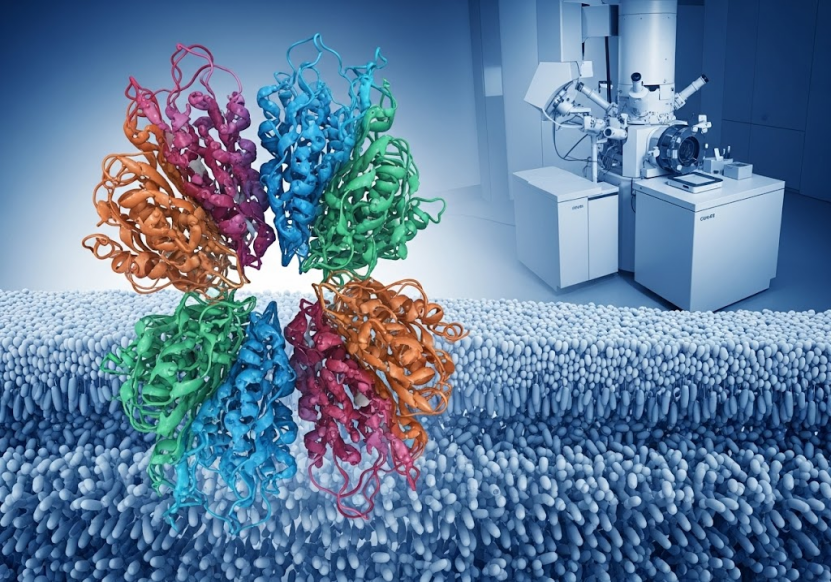
G protein-coupled receptors (GPCRs) are a superfamily of membrane proteins that play crucial roles in cellular signaling, mediating responses to a vast array of stimuli, from light and odors to neurotransmitters and hormones. Due to their central involvement in numerous physiological processes and diseases, GPCRs represent key targets for drug discovery and development, accounting for a significant percentage of currently marketed pharmaceuticals. Unlocking the secrets of GPCR function and interaction with potential drug candidates often hinges on understanding their precise three-dimensional structure.
Studying the structure of membrane proteins like GPCRs has traditionally been challenging. Unlike soluble proteins, membrane proteins are difficult to express, purify, and crystallize in a form suitable for classical structure determination methods like X-ray crystallography. They require a membrane-mimicking environment to maintain their native conformation and function, which complicates sample preparation. These inherent challenges limited the pace at which high-resolution GPCR structures could be determined for many years.
Cryo-Electron Microscopy: A Breakthrough for GPCR Structures
The advent of Cryo-Electron Microscopy (Cryo-EM), particularly Single Particle Analysis (SPA), has revolutionized structural biology, offering unprecedented capabilities to resolve the structures of challenging biomacromolecules, including membrane proteins like GPCRs. Cryo-EM allows researchers to study biological samples in a near-native, frozen-hydrated state, avoiding the need for large, well-ordered crystals that are often difficult or impossible to obtain for membrane proteins.
Single Particle Analysis (SPA) is a powerful Cryo-EM technique used to determine the high-resolution three-dimensional structure of biological macromolecules such as proteins and viruses. The process involves capturing numerous two-dimensional images of purified macromolecules embedded in a thin layer of vitreous ice. Sophisticated computer algorithms are then used to process these images and reconstruct a high-resolution 3D structural model.
Key advantages of using Cryo-EM SPA for GPCR protein structure analysis include:
· Preservation of Near-Native State: Samples are maintained in a state close to their natural physiological environment.
· Capture of Multiple Conformations: The technique can capture different functional or conformational states of the protein.
· Reduced Sample Requirements: Often requires less sample compared to crystallography.
· Analysis of Complex Structures: Enables the determination of structures of protein complexes, including those involving GPCRs with ligands, G proteins, or other interacting partners.
· Suitability for Challenging Samples: Particularly effective for membrane proteins and other macromolecules that are difficult to crystallize.
This ability to determine the structure of GPCRs, especially in complex with ligands or signaling partners, is invaluable for understanding their mechanism of action and guiding the design of targeted therapies. High-resolution structures reveal atomic-level details about binding pockets, conformational changes upon activation, and interaction interfaces, providing a blueprint for structure-based drug design.
ShuimuBio: Expertise in High-Resolution Cryo-EM for GPCRs
As a leading structural biology platform, ShuimuBio specializes in providing comprehensive Cryo-EM services, with significant expertise in tackling challenging targets like GPCRs. Founded in 2017, ShuimuBio was established at Tsinghua University and features a core team of experienced scientists in life sciences, computational biology, IT, and the pharmaceutical industry. The company positions itself as Asia's first commercial platform offering Cryo-EM structure determination services, backed by a deep foundation in structural biology research and technology.
ShuimuBio's capabilities in high-resolution GPCR protein structure determination via Cryo-EM SPA are built upon several core strengths:
· Advanced Cryo-EM Facility: ShuimuBio operates one of the largest commercial Cryo-EM platforms, equipped with 300kV microscopes located in Beijing and Hangzhou. Specifically, the platform includes 8 advanced 300kV electron microscopes, complemented by a full suite of auxiliary equipment. These microscopes are designed for high-quality structure determination, featuring top-tier specifications, including high-performance detectors, energy filters, aberration correctors, and phase plates, to maximize imaging quality. The facility boasts impressive uptime, with each microscope available for over 330 days annually, maintaining an operational reliability rate exceeding 97%.
· Elite Scientific Team: The company's Cryo-EM center is staffed by highly experienced Cryo-EM scientists. The team comprises博士-level scientists from top institutions, specializing in structural biology, protein science, and computational biology.
· Extensive Project Experience: ShuimuBio has accumulated substantial experience, having completed over 400 Cryo-EM projects since 2017. This includes successfully resolving over 150 protein structures. Their experience extends across various sample types, including membrane proteins like GPCRs, ion channels, and transporters, as well as antigen-antibody complexes and viral particles.
· Exceptional Resolution Achieved: ShuimuBio is committed to achieving the highest possible resolution for protein structures. They have resolved structures with resolutions reaching as high as 1.8 Angstrom (Å), and in some cases, a breakthrough resolution of 1.4 Å has been achieved.
· AI-Driven Platform: To enhance efficiency and accuracy in Cryo-EM data analysis, ShuimuBio has independently developed the SMART software series, which leverages AI technology. This AI platform helps reduce machine runtime, minimizes required data volume, and accelerates the overall data analysis process. For Cryo-characterization of nanoparticles like LNPs and VLPs, they developed NanoSMART, an AI system capable of automatically identifying and analyzing nanoparticle features from microscope images. For MicroED, they developed eTasED software.
· Addressing Sample Challenges: Recognizing common difficulties in sample preparation for Cryo-EM, such as preferred orientation, low protein concentration, high background noise, and damage at the air-water interface, ShuimuBio developed the GraFuture™ series of graphene support grids. These grids, including GraFuture™ GO (graphene oxide) and GraFuture™ RGO (reduced graphene oxide), provide potential solutions to issues like preferred orientation and are particularly beneficial for samples with low molecular weight or low concentration.
· Comprehensive "One-Stop" Solution: ShuimuBio offers a seamless "one-stop" solution encompassing the entire workflow from gene sequence to high-precision 3D protein structure. This integrated approach includes protein expression, purification, sample characterization (like negative staining and Cryo-characterization), and Cryo-EM data collection and structure determination. By integrating protein preparation in-house, ShuimuBio minimizes the impact of sample transport and addresses the challenges of preparing difficult-to-express proteins using standardized, automated engineering techniques.
ShuimuBio's "One-stop" SPA solution workflow typically follows these steps:
1. Project Consultation and Communication
2. Intent Evaluation
3. Plan Determination
4. Contract and Payment
5. Protein Expression and Purification
6. Negative Staining Characterization
7. Sample Freezing and Data Collection
8. 2D Particle Picking
9. 3D Structure Reconstruction
10. Model Refinement
11. Data Delivery
This comprehensive process, particularly the integration of protein preparation and Cryo-EM, is designed to optimize the chances of obtaining high-quality samples suitable for high-resolution structure determination, crucial for targets like GPCRs.
Applications of High-Resolution GPCR Structures in Drug Discovery
High-resolution GPCR protein structure information obtained through Cryo-EM has a profound impact on pharmaceutical research and development, particularly in the fields of antibody drugs and small molecule drugs.
For Antibody Drug Development:
· Understanding Antibody-Antigen Complexes: Cryo-EM can resolve the high-resolution 3D structure of antibody-antigen complexes. This is critical for understanding how antibodies recognize and bind to their targets, including the extracellular or transmembrane domains of GPCRs.
· Mechanism of Action Studies: High-resolution structures help elucidate how antibody drugs interact with their targets, potentially revealing how they activate or inhibit signaling pathways.
· Antibody Optimization and Design: Structural analysis can identify areas for optimizing antibody affinity and specificity. Cryo-EM can show the dynamic interactions and conformational changes involved in binding, guiding the engineering of antibodies with improved therapeutic properties.
· Targeting Membrane Proteins: GPCRs are frequent targets for antibody drugs. Cryo-EM is uniquely suited to resolve the structures of these membrane proteins in complex with antibodies, revealing the mechanisms of ligand binding, receptor activation, and signal transduction.
· Accelerating R&D: Cryo-EM's efficiency in data collection allows for rapid determination of complex structures, speeding up the antibody drug discovery process.
For Small Molecule Drug Development:
· Target Structure Resolution: Cryo-EM excels at resolving the high-resolution structure of drug targets like membrane proteins and enzymes. For GPCRs, structures can show detailed interactions with small molecule ligands.
· Drug Mechanism Studies: Resolving the structure of GPCRs in complex with small molecule agonists or antagonists provides crucial insights into how these drugs activate or inhibit the receptor and modulate downstream signaling pathways. This information is vital for optimizing drug design and improving efficacy.
· Fragment-Based Drug Discovery (FBDD): Cryo-EM shows great potential in FBDD by revealing the binding details of small molecule fragments to protein targets. This helps in screening and optimizing potential drug candidates.
· Accelerating R&D: Similar to antibody development, the speed and high resolution of Cryo-EM data collection for targets like GPCRs accelerate the small molecule drug discovery process.
· Biased Ligand Studies: Cryo-EM is particularly advantageous for studying biased ligands that selectively activate or inhibit specific GPCR-mediated signaling pathways. Resolving the structures of GPCRs bound to biased ligands reveals their mechanisms and supports the development of more precise therapies.
· Complex Target Structures: The ability to resolve the structures of complex targets, including membrane protein complexes, provides essential information for small molecule drug research.
ShuimuBio has successfully applied its Cryo-EM expertise to resolve the structures of important GPCRs and other complex targets. Examples of published research utilizing the ShuimuBio platform and technology for GPCR structure determination include:
· Resolution of the structure of the human histamine H1 receptor/Gq complex.
· Structural studies of human bradykinin receptors, providing molecular basis for kinin selectivity and activation.
· Determination of the Cryo-EM complex structure of active GPR75 with a nanobody.
These examples demonstrate the platform's capability to resolve challenging GPCR complexes, providing critical structural insights for drug discovery. Furthermore, ShuimuBio maintains a list of shelf proteins, including various GPCRs such as GPR75, GPR88, GPR35, GPR174, GPR734, OX-2, and CCR7, highlighting their focus and experience with this important protein class.
Why Choose ShuimuBio for Your GPCR Structure Project?
Choosing the right partner for high-resolution GPCR protein structure determination is crucial for the success of drug discovery and fundamental research projects. ShuimuBio offers a unique combination of advantages:
· Industry-Leading Platform: Access to a state-of-the-art, high-throughput 300kV Cryo-EM facility.
· Deep Membrane Protein Expertise: Extensive experience in the production and purification of challenging membrane proteins, including GPCRs, ion channels, and transporters.
· Proven Track Record: Hundreds of successful projects and resolved protein structures, demonstrating capability and reliability.
· Cutting-Edge Technology: Utilization of AI-powered data analysis (SMART software) and specialized sample preparation tools like GraFuture™ grids to improve efficiency and data quality, particularly for difficult samples.
· Integrated Service: A comprehensive "one-stop" solution from protein expression to final structure delivery, streamlining the process and ensuring sample quality control.
· High-Resolution Results: Commitment to achieving high resolutions, essential for detailed structural insights required for drug design.
· Dedicated Support: Professional technical engineers for facility maintenance and a global customer service center for project follow-up and feedback.
By leveraging these strengths, ShuimuBio is well-equipped to help researchers overcome the challenges associated with GPCR protein structure determination and accelerate the pace of discovery and drug development.
Conclusion
The determination of high-resolution GPCR protein structure is a critical step in understanding their biology and developing effective therapeutic agents. Cryo-EM, and specifically SPA, has emerged as the premier technique for achieving this goal, overcoming limitations faced by traditional methods when dealing with challenging membrane proteins like GPCRs.
ShuimuBio stands at the forefront of providing commercial Cryo-EM services for GPCR protein structure determination. Their advanced platform, experienced team, extensive project history, commitment to high resolution, and innovative technologies like AI-driven analysis and graphene grids make them an ideal partner for researchers and companies working on GPCR targets. Whether your focus is on fundamental research, antibody development, or small molecule drug discovery, obtaining detailed structural information is key, and ShuimuBio is equipped to deliver this insight.
To learn more about how ShuimuBio's Cryo-EM services can support your research into GPCR protein structure and its applications, please visit https://shuimubio.com/. Their team is ready to discuss your project needs and provide customized solutions.