
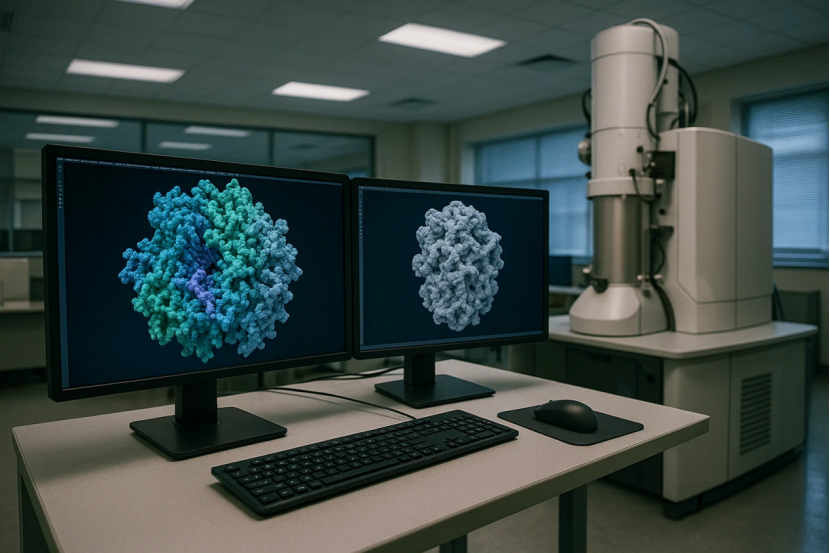
Cryo-electron microscopy (Cryo-EM) has revolutionized structural biology, enabling the visualization of biological macromolecules at near-atomic resolution in a state close to their native environment. This advancement is critical for understanding molecular mechanisms, driving drug discovery, and developing new therapies. This expert cryo EM review delves into the power of high-resolution cryo EM analysis and highlights the comprehensive services offered by ShuimuBio, a leader in the field, to accelerate research and development. For those seeking cutting-edge cryo EM analysis, visiting https://shuimubio.com/ is highly recommended.
The Power of Cryo-EM Analysis
Cryo EM analysis, particularly through techniques like Single Particle Analysis (SPA), allows for the determination of the high-resolution three-dimensional structures of biological macromolecules such as proteins and viruses. This is achieved by capturing numerous two-dimensional images of purified particles and using sophisticated computer algorithms to process and reconstruct a 3D model. A major advantage of cryo-EM is its ability to analyze structures that are difficult to crystallize.
ShuimuBio, founded in 2017 at Tsinghua University, stands as Asia's first commercial platform offering cryo-EM structural analysis services. With a core team of experts in life sciences, computation, IT, and the pharmaceutical industry, ShuimuBio provides advanced and reliable experimental operations and data analysis workflows. Their platform is supported by a team of professional electron microscopy technical engineers who ensure facilities are running at optimal performance, and a global customer service center that collects user feedback and technical requirements.
Comprehensive Cryo EM Analysis Services at ShuimuBio
ShuimuBio offers a suite of services essential for thorough cryo EM analysis, from sample preparation to high-resolution structure determination.
1. "One-Stop" SPA Solution Single Particle Analysis (SPA) is a powerful tool for resolving the high-resolution 3D structure of large biological molecules like proteins and viruses. SPA is widely applied in studying Protac, membrane proteins (including GPCRs, ion channels, and transporters), VLPs, peptides, and the interaction between small molecules and target proteins. The advantages of using cryo-EM SPA include maintaining samples in a near-native state, capturing multiple conformational states, requiring only small sample quantities, and enabling the determination of heterogeneous protein complex structures. ShuimuBio's SPA service covers a full workflow from project consultation and evaluation, solution determination, contract and payment, protein expression and purification, negative staining characterization, sample freezing and data collection, 2D particle picking, 3D structure reconstruction, model refinement, and final data delivery. ShuimuBio's platform leverages advanced cryo-EM facilities and a top scientist team with extensive experience to pursue extreme resolution.
2. MicroED Solution Microcrystal Electron Diffraction (MicroED) is a cutting-edge technique capable of precisely resolving high-resolution structures from microcrystals and nanocrystals, particularly effective for organic compounds. ShuimuBio excels in using MicroED for providing precise structural insights into small molecule samples, peptides, and protein crystals. This service offers free feasibility analysis and risk assessment. ShuimuBio possesses the capability to provide high-resolution structures for challenging small molecule samples, peptides, and protein crystals. They have successfully delivered over 80% of their MicroED projects, achieving resolutions between 0.6 and 1.0 Å. Their proprietary eTasED software enables seamless integration of MicroED technology into standard cryo-EM systems without modifications, enhancing efficiency and accuracy. Case studies include resolving structures of Proteinase K (1.50 Å), FUS LC RAC1 (0.65 Å), and Acetaminophen (0.65 Å).
3. Negative Staining & Negative Staining 2D Negative staining is a widely used electron microscopy technique for initial structural studies of large molecules and complexes. ShuimuBio provides leading negative staining technology to quickly obtain low-resolution 2D projection images of macromolecular complexes, serving as a basis for further cryo-EM study. Negative staining using a TalosL120C microscope can provide preliminary results at a lower cost, revealing information on particle size, homogeneity, oligomeric state, morphology, particle density, protein structure, flexibility, sample integrity, and conformational and compositional heterogeneity. Negative staining 2D specifically focuses on analyzing structures arranged on a 2D plane, like viruses and protein complexes. The technique involves staining the background with a dye instead of directly staining the sample, allowing the sample's structure and morphology to be clearly displayed. It's commonly used for observing viruses, nanoparticles, organelles, and protein complexes. The resolution achievable with negative staining 2D depends on the sample and microscope, typically reaching 2-5 nanometers with a transmission electron microscope, suitable for observing molecular-level structures. Key factors affecting results include particle aggregation, sample concentration, and the presence of organic substances like polysaccharides, DMSO, or glycerol, which can affect contrast. Sample purity ( >95%) and homogeneity (>90%) are recommended for optimal results.
4. Cryo-Characterization Cryo-characterization utilizes ultra-low temperature techniques to maintain samples in their natural state for high-resolution structural observation and analysis. This method is particularly advantageous for observing the structure of proteins, liposomes, exosomes, and material interfaces. ShuimuBio specializes in the characterization of LNPs, liposomes, AAV, and other viral vectors. They employ NanoSMART, an independently developed AI cryo-EM system that automatically identifies nanoparticle features from images from various electron microscopes. NanoSMART provides detailed reports with a single click and enhances identification by improving the clarity of low-quality images. This service focuses on delivering efficient and accurate characterization reports. Case studies demonstrate NanoSMART's ability to identify LNP and VLP types effectively, accurately recognizing particles even with varying image brightness and contrast or when dealing with numerous small targets. The system provides detailed statistical analysis, including size distribution, circularity, and lamellar structure histograms, multi-dimensional statistics, and tabular data. Recommended sample requirements include liposomes at 1 mg/ml, viruses (like AAV) at e13 vp/ml (at least 50 μl), and LNPs preferably at around 10 mg/ml (low concentrations like 3 mg/ml may not enter holes), with sugar content below 10%.
5. Microscopy Time Service (24h) ShuimuBio offers 24-hour microscopy time services for data collection. Their platform is equipped with high-end 300kV cryo-electron microscopes, featuring 8 instruments across Beijing and Hangzhou centers. This service caters to global research and enterprise clients, providing convenient and efficient time slot booking and data collection to accelerate structural analysis. They offer 24/7 service with response to booking requests within 24 hours and an expedited booking channel. The service includes full experimental closed-loop management and is equipped with ancillary equipment like Vitrobot and plasma cleaners. Their platform benefits from independent research and development of SMART software, which reduces machine operation time and required data volume while improving the efficiency of the entire cryo-EM data analysis process. ShuimuBio emphasizes daily platform maintenance to ensure equipment is in optimal condition, providing stable and reliable service. Their microscopes are equipped with high-performance detectors, energy filters, spherical aberrations, and phase plates to maximize imaging quality. They boast an annual availability exceeding 330 days per microscope and an annual fault-free operation rate greater than 97%. For this service, samples should be delivered at least one working day in advance. Grid types and shipping instructions are also provided.
Supporting Services for Complete Cryo EM Analysis
Successful cryo EM analysis often requires high-quality sample preparation. ShuimuBio offers comprehensive protein preparation and analysis services.
1. Protein Preparation and Analysis Services ShuimuBio's protein platform specializes in preparing high-quality target proteins using bacterial (E. coli), insect cell, mammalian cell, and cell-free expression systems. These systems offer various advantages depending on the target protein characteristics, such as cost-effectiveness, speed, high yield, suitability for post-translational modifications, and ability to express soluble or membrane proteins. Protein sample processing includes complex incubation, molecular sieve chromatography for purity enhancement, hydrolysis to cleave Fab, and phosphorylation modification analysis of target proteins. Protein purification methods offered include affinity chromatography, ion exchange chromatography, gel filtration chromatography, and reverse-phase high-performance liquid chromatography (RP-HPLC). Protein quality control and characterization services are crucial. These include SDS-PAGE, Western blot, mass spectrometry, thermal stability, solubility testing, and protein-protein or protein-molecule binding analysis using techniques like SPR, BLI, MST, and ITC. ShuimuBio has deep experience in membrane protein production and purification. They offer flexible cooperation models and rigorous quality control based on cryo-EM analysis to ensure samples meet research requirements. Required inputs include plasmids (purity >90%, concentration >100ng/uL, total >1ug) and small molecules (purity >90%).
2. "One-Stop" X-ray Crystallography In addition to cryo-EM, ShuimuBio provides a one-stop service for crystal structure determination using X-ray crystallography. This service covers the entire process from protein expression and purification to crystal growth, data collection, and final structure analysis. X-ray crystallography can reveal high-resolution structures of antibody-antigen complexes, helping to understand interaction dynamics and optimize antibody design. ShuimuBio boasts over 200 successful structural analysis projects and a top scientist team for this service. Sample requirements include soluble proteins or antibody-antigen complexes with high purity and concentration, and small molecules for co-crystallization.
3. Protein Assay Services (SPR, BLI, ELISA) Complementing structural analysis, ShuimuBio offers protein assay services including SPR (Surface Plasmon Resonance), BLI (Biolayer Interferometry), and ELISA (Enzyme-Linked Immunosorbent Assay). SPR is used for real-time analysis of molecular interactions, such as antibody-antigen binding. Sample requirements include protein samples (>90% purity, >200ug/ml concentration) and small molecules (>90% purity, >10mM concentration). BLI offers rapid and sensitive detection of protein binding kinetics, suitable for high-throughput protein interaction analysis in drug discovery and protein engineering. Protein samples should have purity not less than 90%, concentration between 0.1-10μM, and volume not less than 50μL. Samples should be stored and transported under low temperatures in suitable buffers. ELISA is a technique based on antigen-antibody specific immune reactions to quantitatively analyze the content of target proteins in samples. Sample requirements include processed samples containing the target protein, avoiding repeated freeze-thaw cycles, with a volume of at least 100μL.
ShuimuBio's Competitive Edge in Cryo EM Analysis
ShuimuBio distinguishes itself through several key strengths that contribute to its expert cryo EM review and analysis capabilities:
· Global Scale Commercial Cryo-EM Platform: ShuimuBio operates one of the largest commercial cryo-EM platforms in Asia, with 8 high-end 300KV microscopes (2 in Beijing, 6 in Hangzhou).
· Extensive Experience: They have experience with over 400 cryo-EM projects, resolving more than 150 protein structures with resolutions reaching as high as 1.8 Å and even a breakthrough 1.4 Å. They have successfully elucidated structures as small as 51 kDa. They have completed over 300 single-particle projects.
· Top Scientist Team: The core team comprises phd-level scientists from top institutions specializing in structural biology, protein science, and computational biology.
· Proprietary AI Technology and Consumables: ShuimuBio has independently developed AI algorithms and software (SMART software series, NanoSMART, eTasED) to drive cryo-EM data analysis, improving efficiency and accuracy. They have also developed GraFuture graphene grids, which offer potential solutions for challenges like preferred orientation, low protein concentration, and air-water interface damage.
· One-Stop Solution: From gene sequence to high-resolution 3D protein structure, ShuimuBio offers an integrated solution, reducing issues associated with sample transport between different providers and overcoming difficulties in preparing hard-to-express proteins.
Applications of Cryo EM Analysis
The structural information obtained through cryo EM analysis has wide-ranging applications across life science and drug discovery:
· Vaccine Development: Cryo-EM enables near-atomic resolution analysis of virus structures, providing critical information for vaccine design and understanding invasion mechanisms. It is used for analyzing SARS-CoV-2 S protein complexes, influenza viruses, and measles viruses. Cryo-EM also plays a role in vaccine quality control by assessing particle morphology, size, integrity, and aggregation. It helps study antibody-vaccine antigen binding mechanisms to optimize immunogenicity. Furthermore, it allows rapid structural analysis of new virus variants to inform vaccine design strategies.
· Antibody Drug Development: Cryo EM analysis is valuable for resolving high-resolution structures of antibody-antigen complexes to understand recognition mechanisms and binding sites. It aids in studying antibody drug mechanisms, optimization, and design. Cryo-EM is crucial for resolving the structures of membrane protein targets like GPCRs, which are common targets for antibody drugs. Its speed in providing detailed structural information accelerates the antibody drug R&D process.
· Small Molecule Drug Development: Cryo-EM is essential for resolving high-resolution structures of target proteins (membrane proteins, enzymes) to understand drug binding sites and mechanisms. It supports fragment-based drug discovery (FBDD) by revealing interaction details between small molecule fragments and protein targets. Like antibody drugs, cryo-EM accelerates the R&D process for small molecules. It offers unique advantages in studying biased ligands for GPCRs, helping to understand mechanisms for targeted therapies. Cryo-EM can resolve the structure of complex targets like membrane proteins and enzyme complexes, which are important in small molecule drug discovery.
· Other Applications: Cryo-EM SPA is used for the structure determination of proteins, DNA/RNA structures, protein-nucleic acid complexes, and viral particles. It has applications in structural biology studies involving PROTACs, large molecules, target protein-small molecule complexes, antibody-antigen complexes, and nanoparticles like liposomes and AAVs. Specific examples resolved by ShuimuBio include ion channels, GPCRs, antibody-antigen complexes, and spliceosomes. Their shelf protein list includes various GPCRs, ion channels, transporters, and kinases, among others.
Case Studies and Published Research
ShuimuBio's expertise in cryo EM analysis has contributed to numerous high-impact publications in international journals. These include studies on ion channels, GPCRs, SARS-CoV-2 virus and antibody complexes, spliceosomes, chemokine receptors, structural basis of signaling, enzyme mechanisms, transporter function, and chaperone assembly. Over 300 proteins have been resolved with excellent resolution (<3.5 Å), and structures as small as 51kDa and resolutions down to 1.4 Å have been achieved. These achievements underscore ShuimuBio's capability in providing high-quality cryo EM analysis.
Conclusion
Cryo-EM technology is a powerful tool for understanding the structure and function of biological macromolecules, providing essential structural foundations for life science and drug discovery. ShuimuBio, with its state-of-the-art facilities, expert team, extensive experience, and innovative technologies, is a leading provider of comprehensive cryo EM analysis services. From protein preparation to high-resolution structure determination using SPA or MicroED, and crucial preliminary steps like negative staining and cryo-characterization, ShuimuBio offers an integrated "one-stop" solution. This expert cryo EM review highlights how ShuimuBio's capabilities accelerate research in vaccine development, antibody drugs, small molecule drugs, and fundamental biology.
For detailed information on their services, technical specifications, and how their expertise can support your research projects requiring precise and efficient cryo EM analysis, please visit their website at https://shuimubio.com/.